
Kavan, Anna
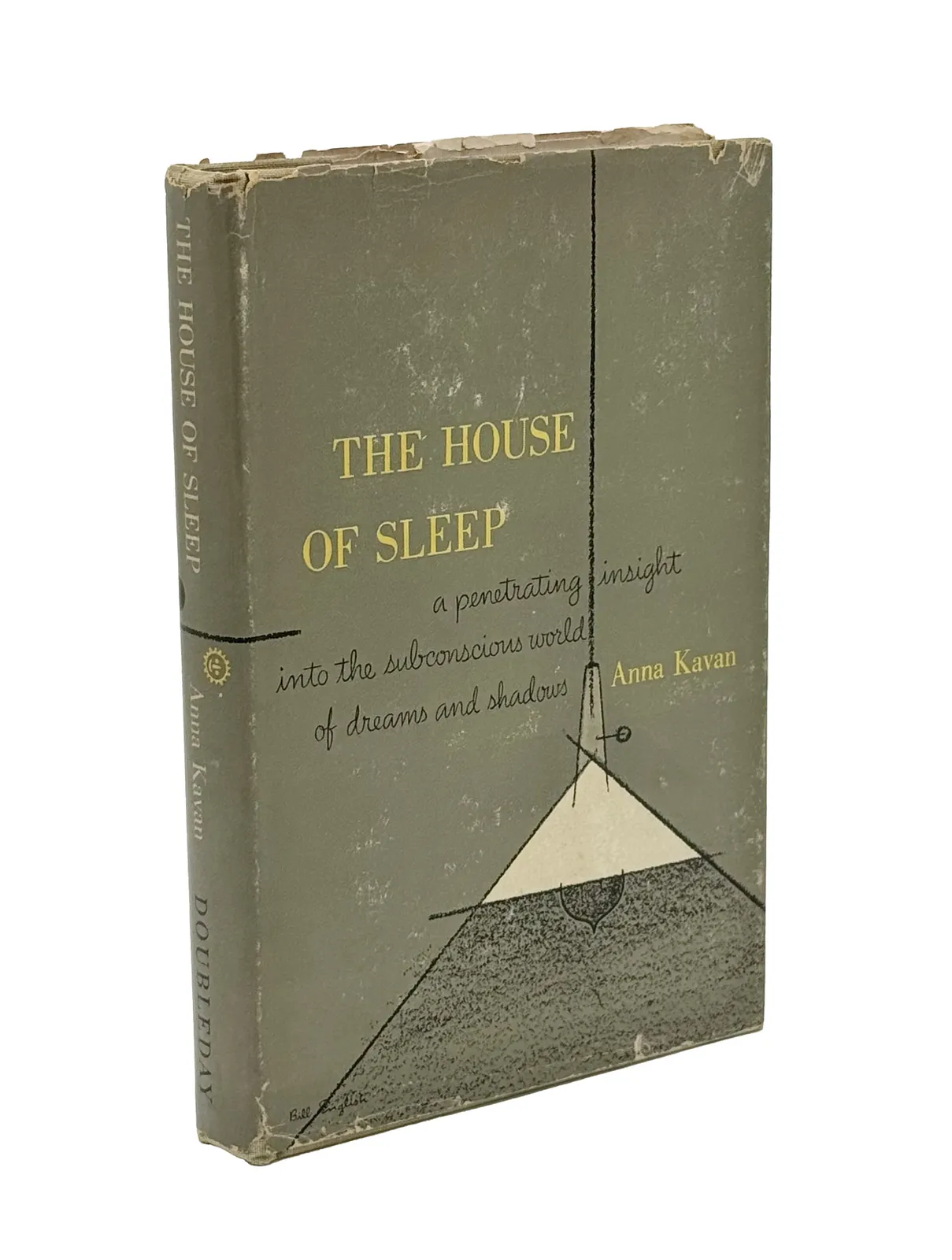
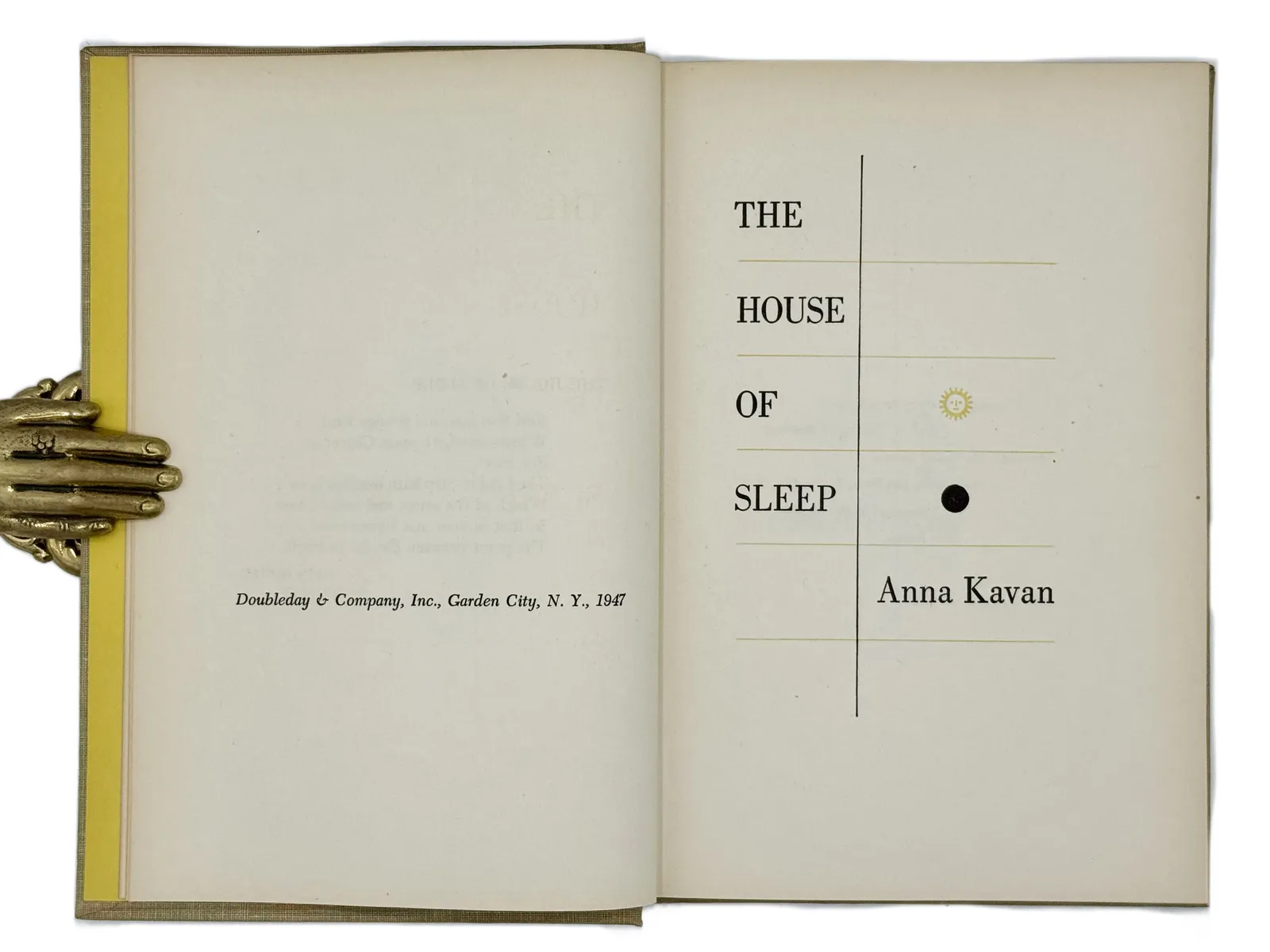
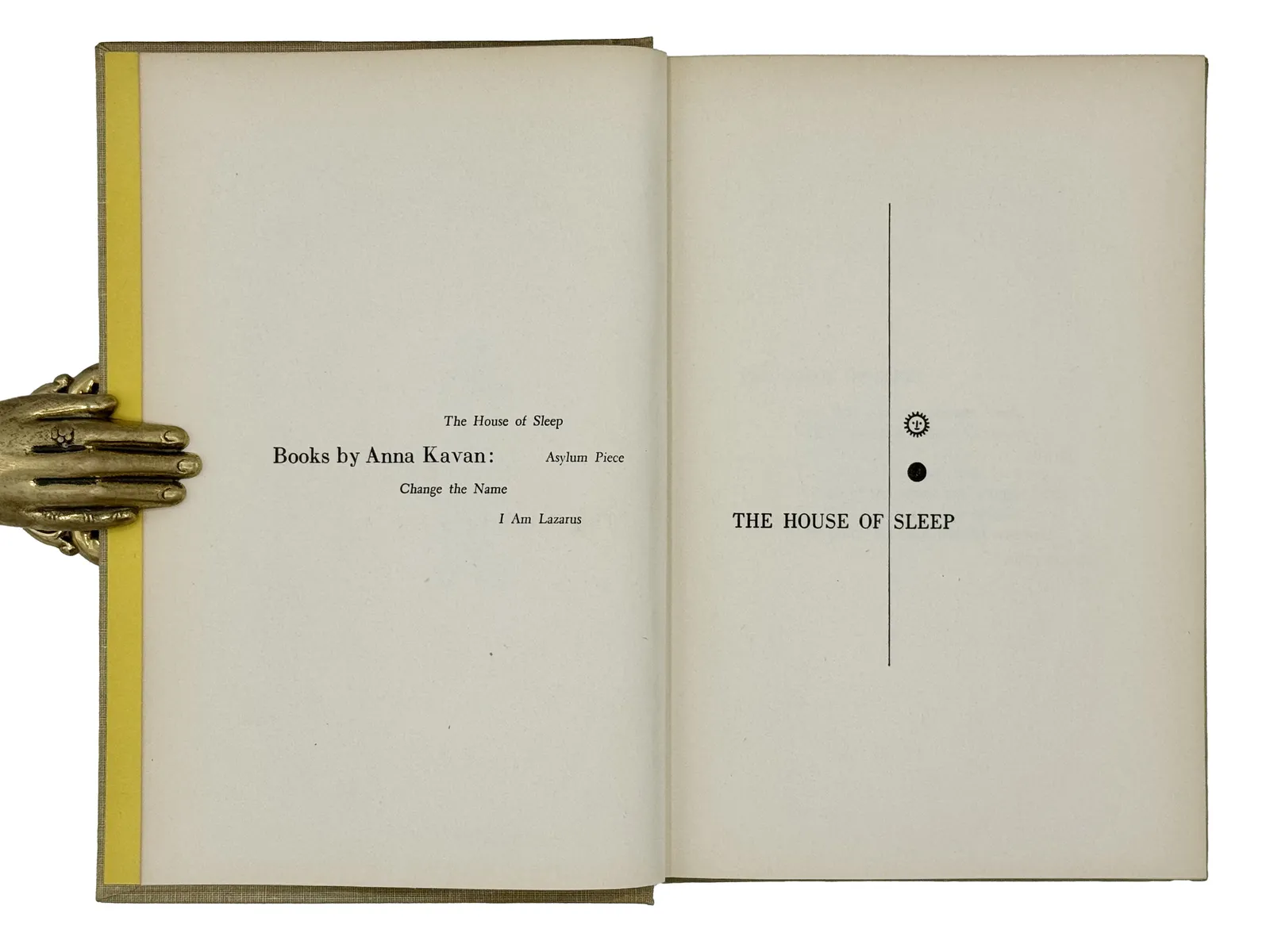
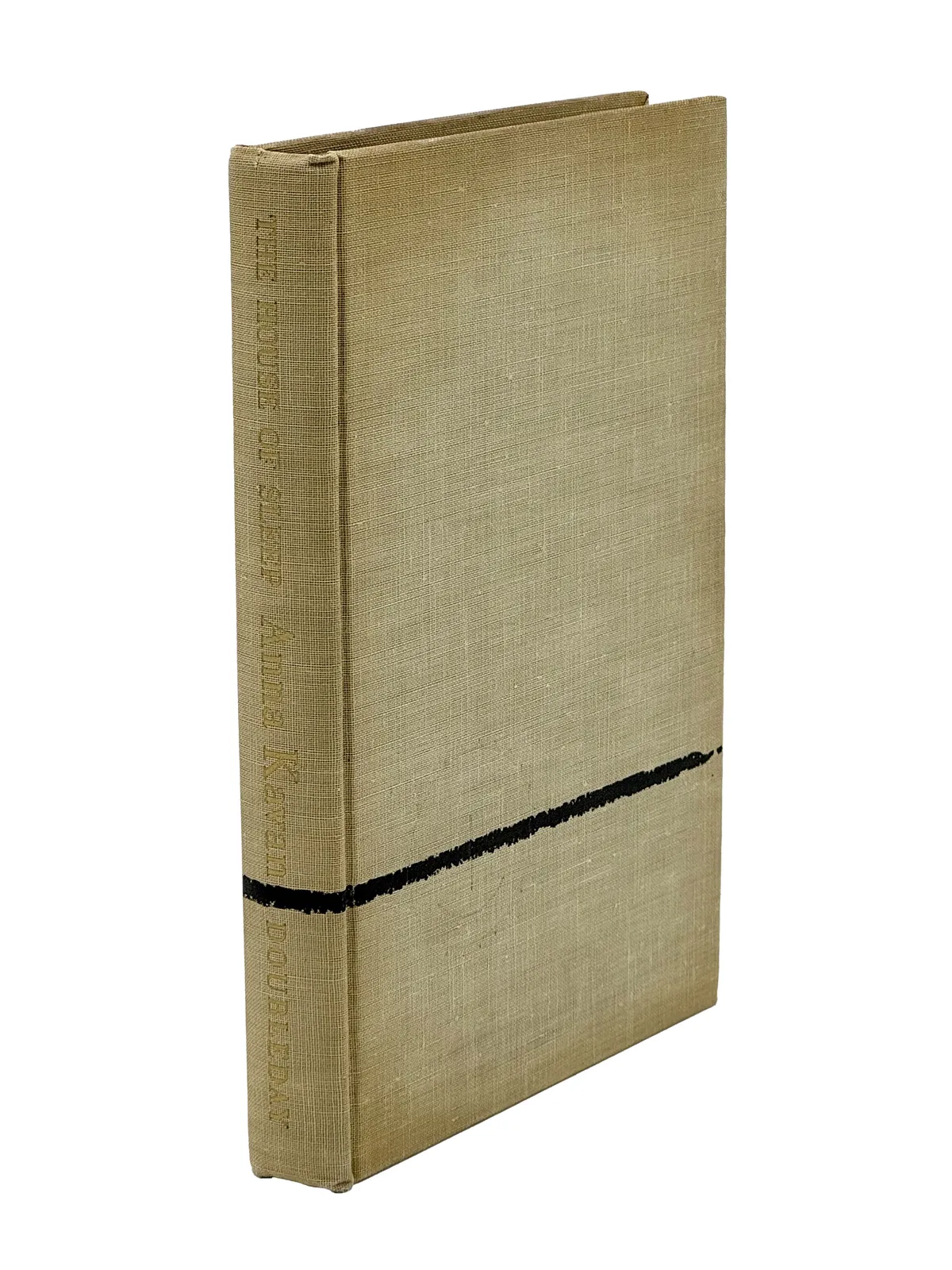
Scarce first edition of The House of Sleep, one of Kavan's most radically experimental novels, in the extremely rare dustjacket.
Further images


Having no plot nor conventional characters, The House of Sleep plays with traditional notions of narrative and syntax, using collage and cinematic effects to create a sense of dislocation and unease: the world of sleep and dreams. Like many British Second World War authors, Kavan wrote that literature must somehow reflect and respond to the pressures of war-torn society, and she was convinced that the violence and strangeness of the times necessitated a move away from the realist mode of writing. Borrowing from H.G. Wells, she referred to this period as the "twilight of mankind," and through The House of Sleep explored the ways in which violent images of war infiltrated the dream world. It was her deepest fictional venture into the realm of the subconscious and "the inchoate fluidity of a time when culture as previously known is almost certainly ending" (Kavan 1946).
In her critical writing for Horizon magazine, Kavan interpreted the Second World War and its wide-scale destruction as the apogee of 'a certain scientific precociousness' that had led humanity into 'a fearful crisis.' (Kavan 1946). The night world allowed for the opportunity to arrive closer to a form of collective humanity, a trope previously explored by Joyce and other modernists. "The focus on the irrational and the subconscious at the heart of this work serves both to explore the workings of the human mind as well as to offer up a mirror to society. As such the radical experimentation of [Sleep Has His House] can be understood as possessing a profoundly political aim: to further an understanding of how humanity had caused the terrible events of the mid-twentieth century" (Van Hove 2017). Her dream scenarios function to contest "the modern cult of the machine - a cult variously promulgated not only in technophilic movements such as futurism, constructivism, purism and the middle Bauhaus, but also in the everyday ideologies of the Fordist state, whether capitalist, communist or fascist' (Foster 1993).
The Times Literary Supplement, the only major British newspaper to review the novel when it was first published, printed that "writing as good as this is rare, and this book is a notable addition to the literature of 'night-time language'" (Van Hove 2017). However, not much attention was paid to Kavan until the publication of her final novel Ice (1967) a year before she died. Her brief late acclaim never made up for her neglected status within the canon of experimental modernism.
We have found no other copy in the dustjacket and only one copy appears in the auction records (2006). This New York edition predates the first UK edition, titled Sleep Has His House, by a year.
Sources:
Kavan, A. 'Back to Victoria,' Horizon, XIII: 73. pp. 61-6.
Van Hove, H. (2017) "Exploring the Realm of the Unconscious in Anna Kavan's Sleep Has His House." Women: A Cultural Review, 28(4), pp. 358-374.
Foster, H. (1993), Compulsive Beauty, Cambridge Massachusetts: MIT Press. p. 136.
Join our mailing list
* denotes required fields
We will process the personal data you have supplied in accordance with our privacy policy (available on request). You can unsubscribe or change your preferences at any time by clicking the link in our emails.