
Katsushika Hokusai
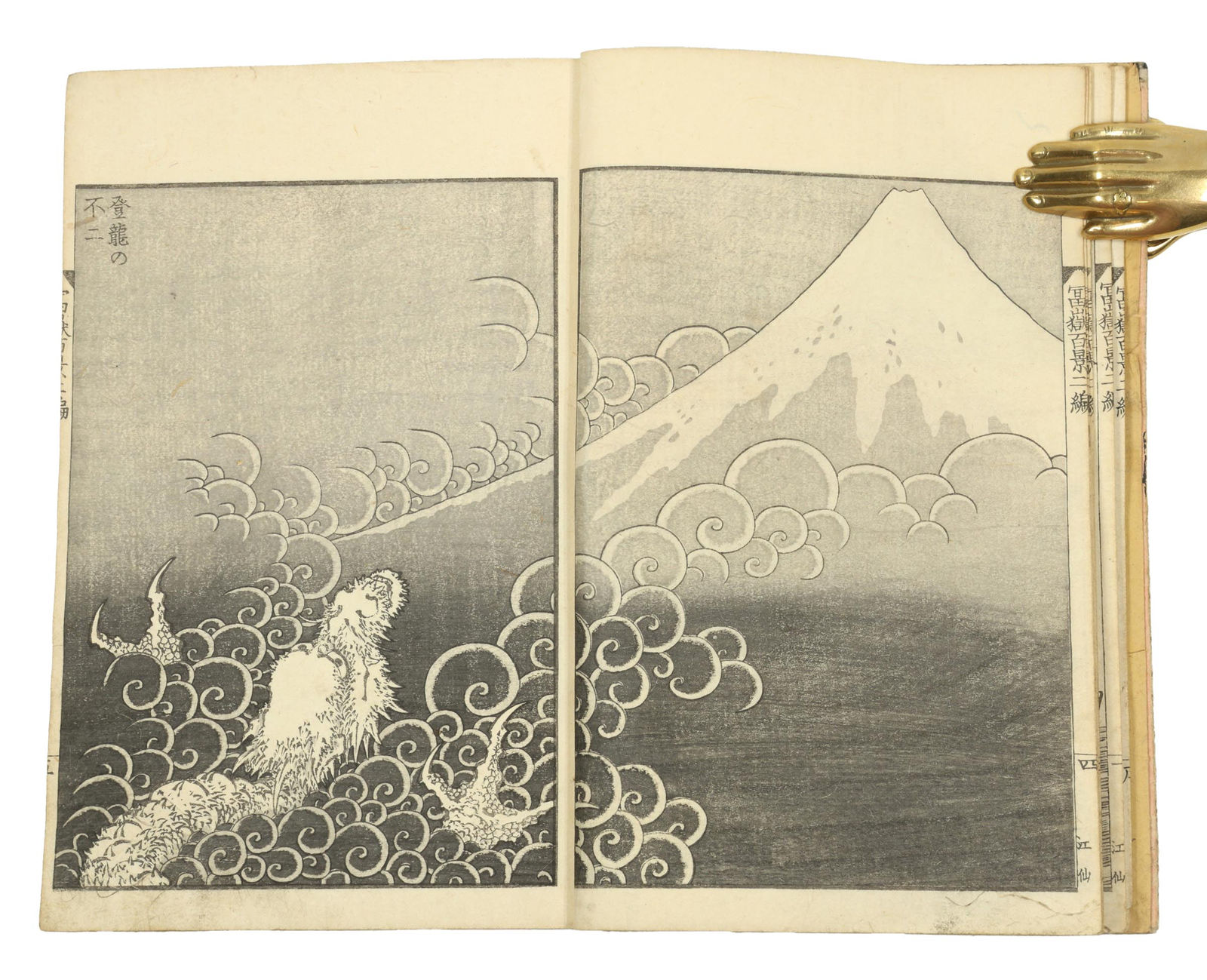
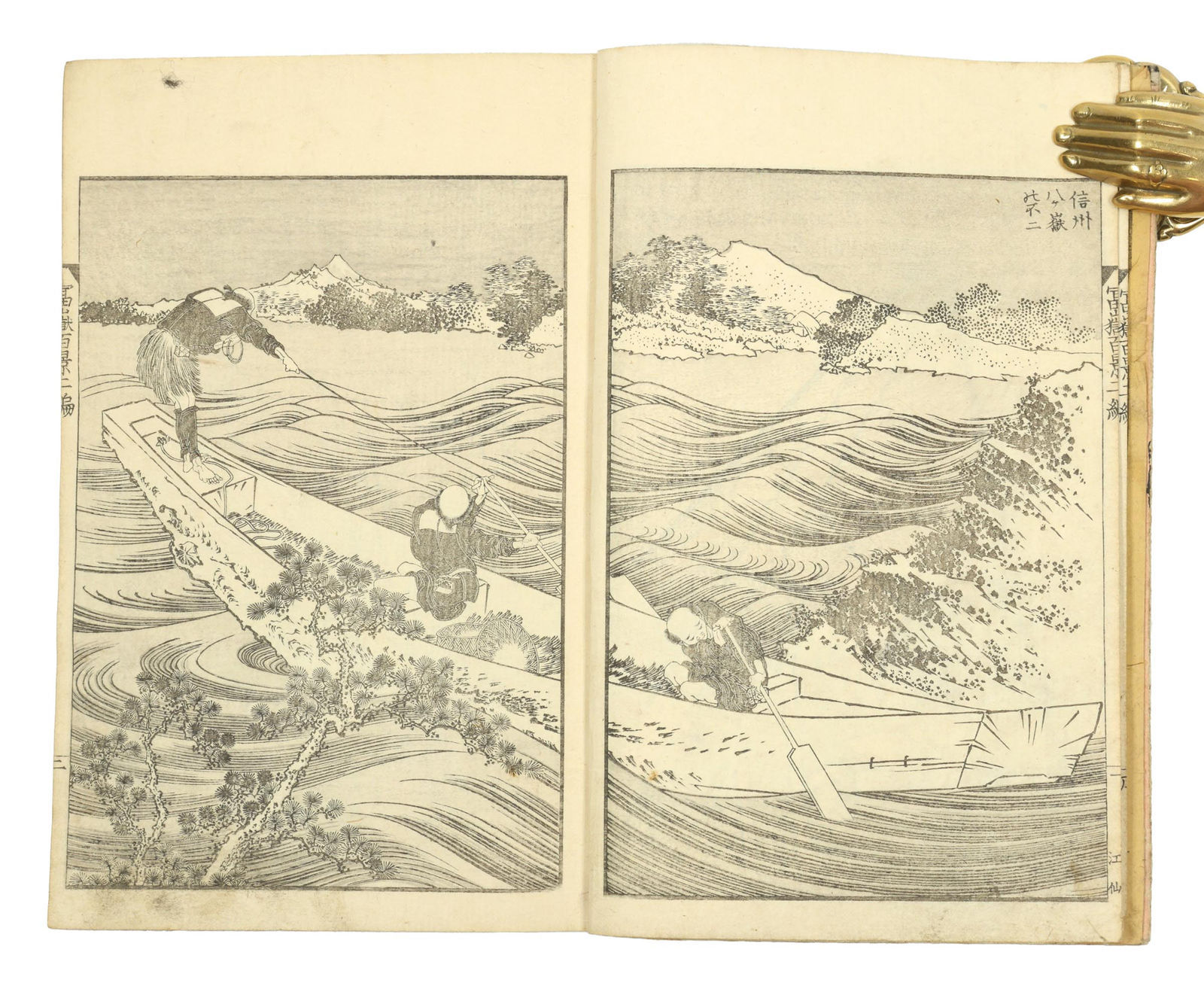
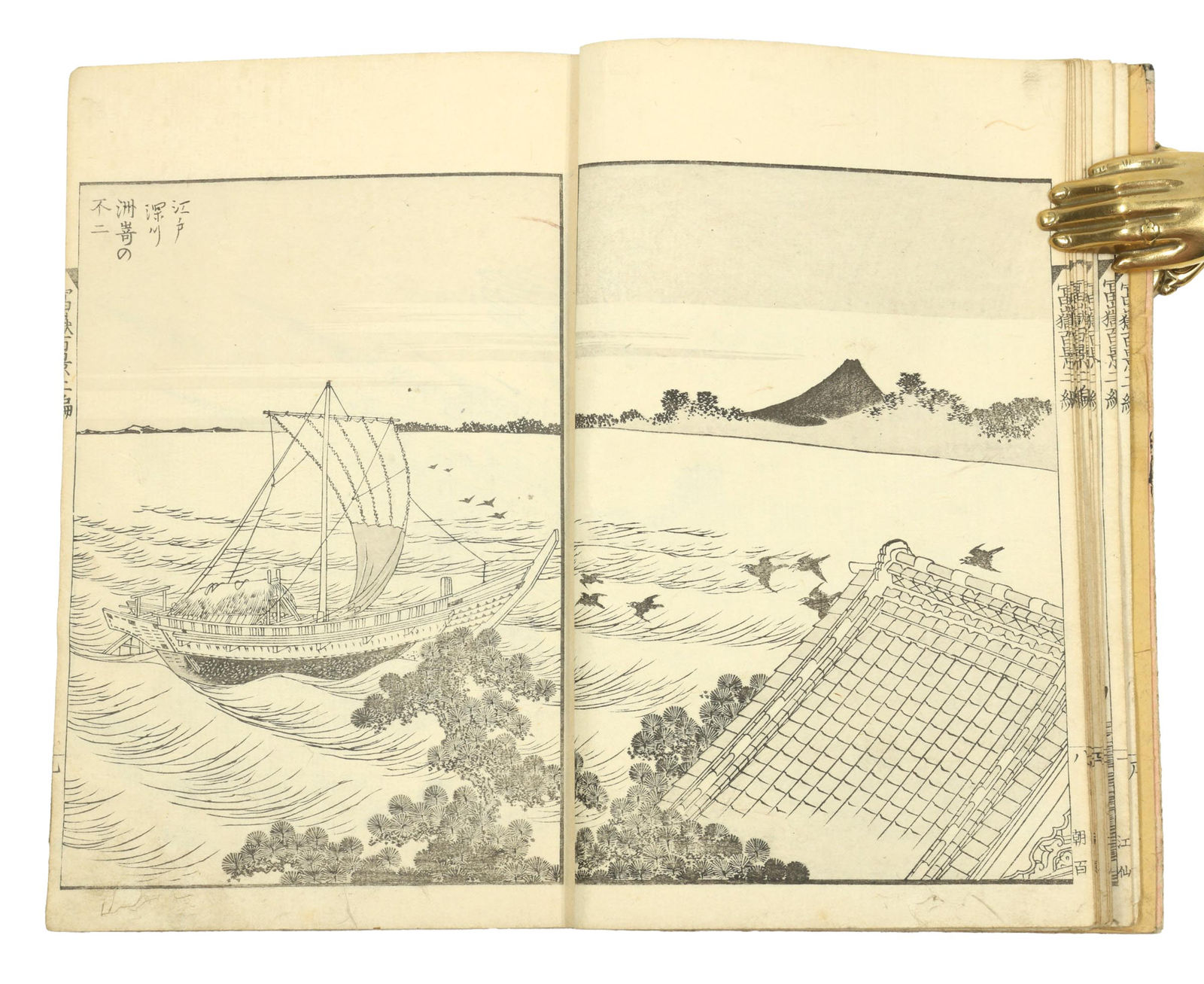
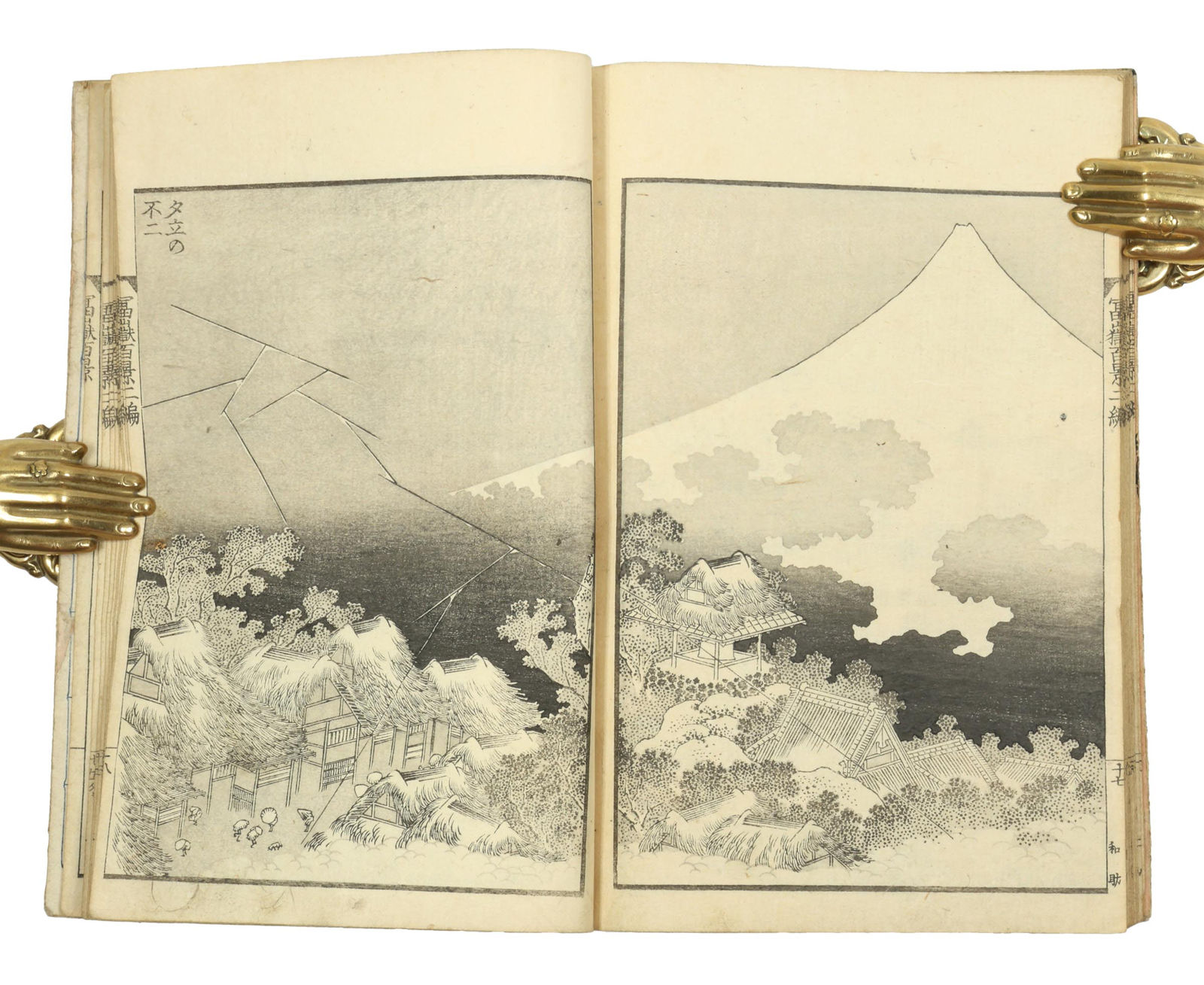
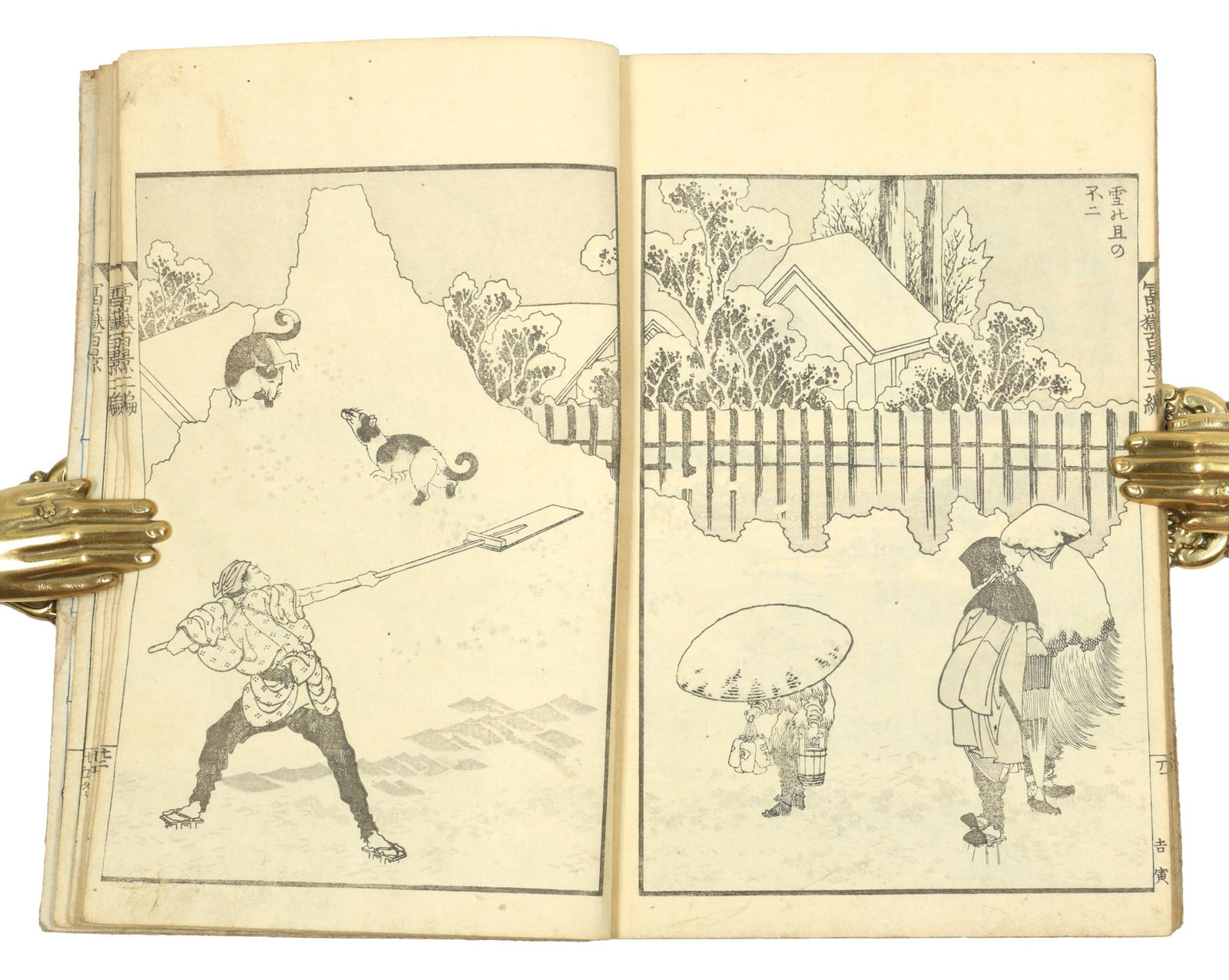
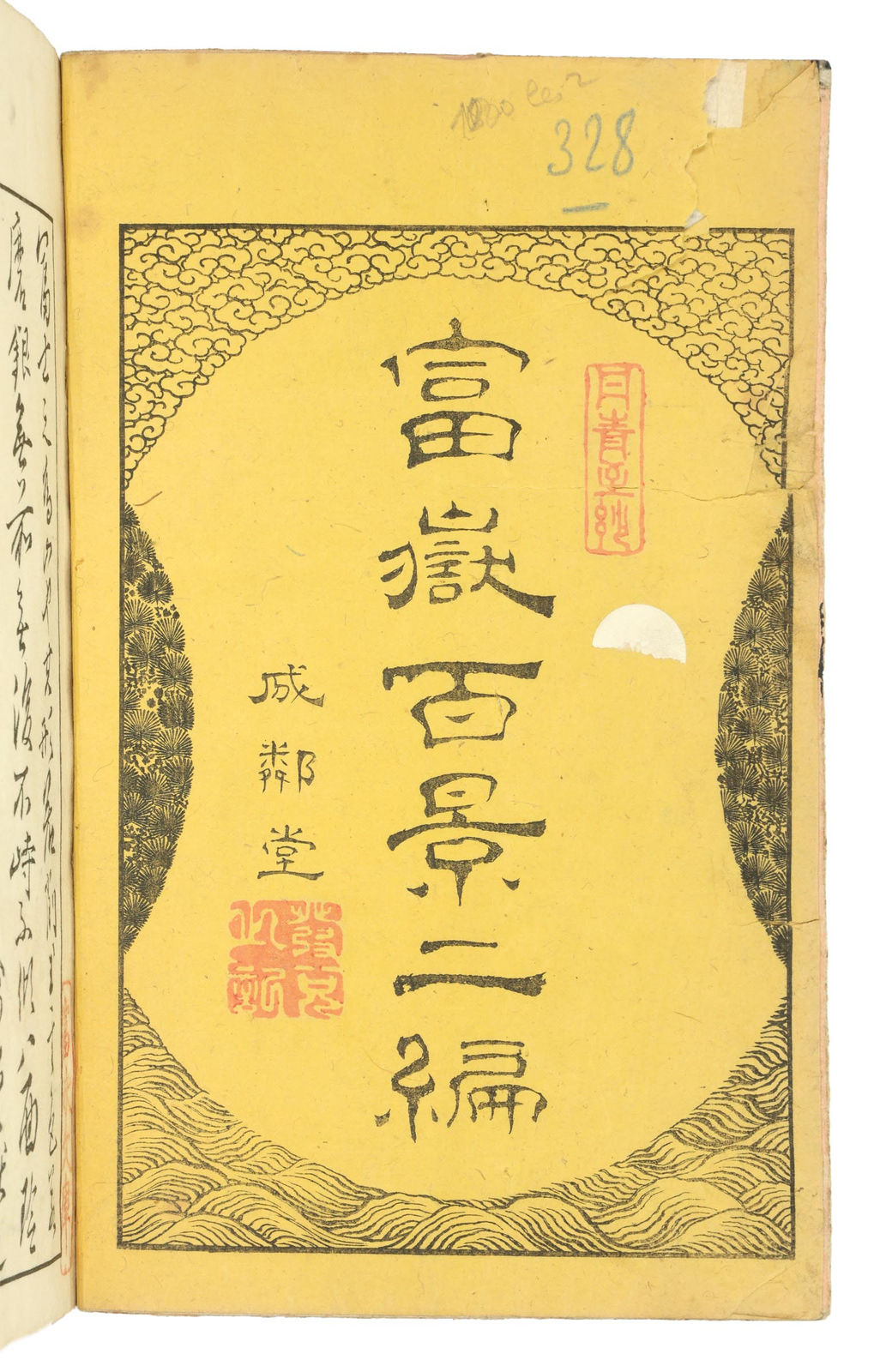
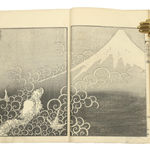
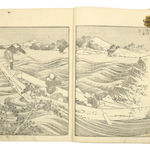
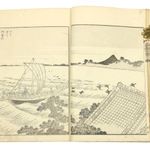
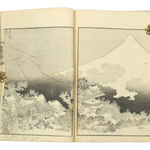
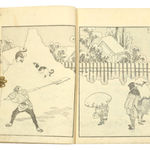
First edition, first issue, very rare, an exceptional copy of one of the most famous of all illustrated books, the One Hundred Views of Mt. Fuji, known as the ‘Falcon Feather’ edition; this is the Goncourt copy in the rare Falcon Feather bindings. The plates in this first issue are in fine impressions, Hokusai's Fugaku Hyakkei is one of the best Japanese woodblock books ever created, it transcends its nationality and ranks amongst the highest tier of illustrated books from any date and any culture.
Further images
-
(View a larger image of thumbnail 1
)
-
(View a larger image of thumbnail 2
)
-
(View a larger image of thumbnail 3
)
-
(View a larger image of thumbnail 4
)

-
(View a larger image of thumbnail 5
)
-
(View a larger image of thumbnail 6
)
-
(View a larger image of thumbnail 7
)
-
(View a larger image of thumbnail 8
)



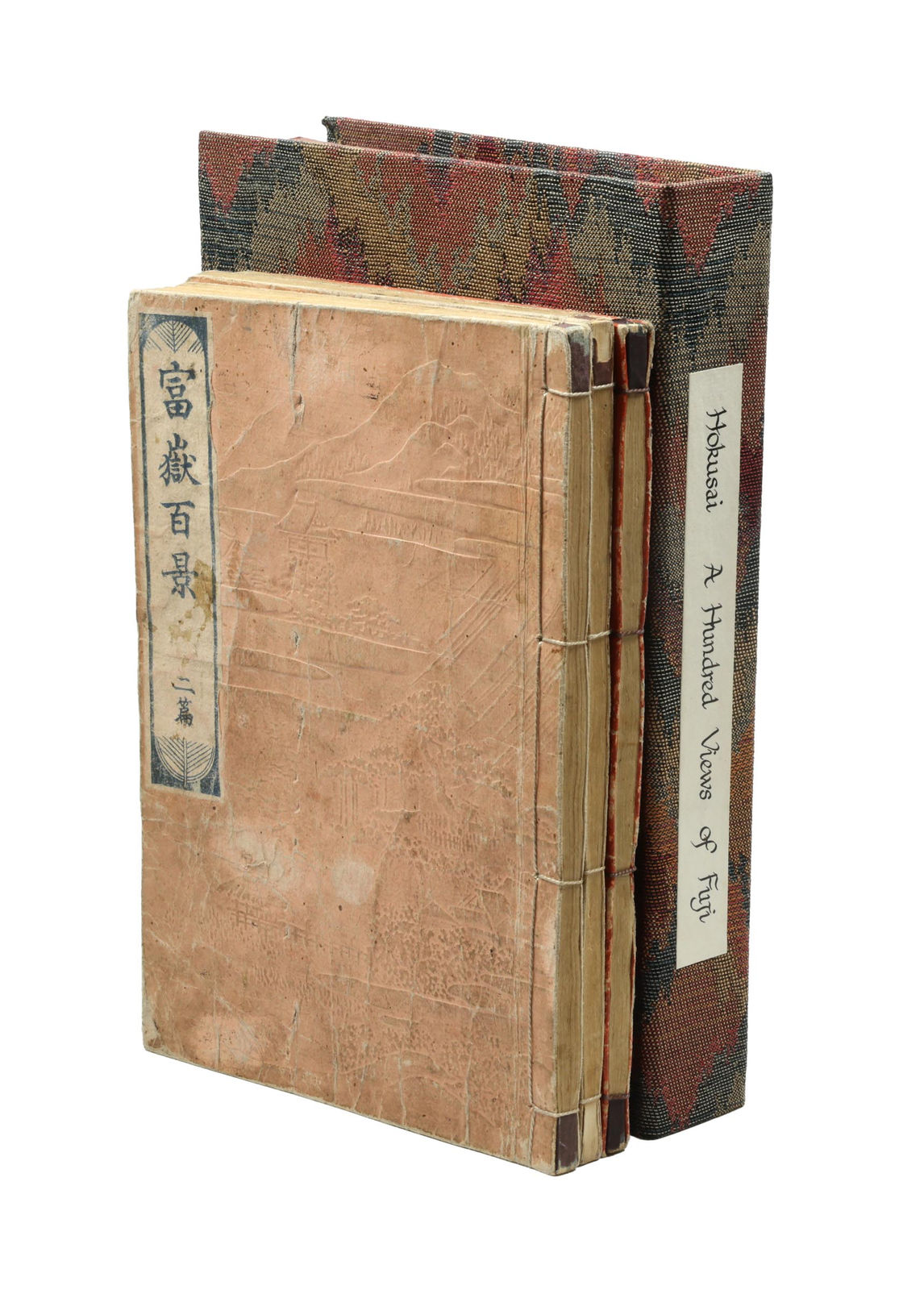
Three volumes, (226 x 158 mm). 27 ff.; 27 ff.; 26 ff., vol. 1 with 12 full-page and 19 double-spread woodcuts; vol. 2 with 10 full-page and 20 double-spread woodcuts; vol. 3 with 32 full-page and 9 double-spread woodcuts; complete with 102 woodcuts in sumi technique in black and grey inks, all after Hokusai, most blocks cut by Egawa Tomekichi. Volume 1 and 2 in original salmon-pink embossed paper wrappers with an 'Omi hakkei' landscape design, original printed title slips with falcon feather design above and below in blue on buff “falcon-feather”; vol. 3 in orange paper wrappers with title slip, pink embossed wrappers with some wear and light soiling; internally clean with fine, sharp impressions throughout, stored in a recent patterned silk-covered box.
The legendary salmon-pink covers were also designed by Hokusai with embossed landscape images of rain, snow, moon, sails, a bridge, and descending geese. The first two volumes were printed in 1834 and 1835 in Tokyo and the third volume appeared over ten years later when the publisher Yerakuya Tôshirô of Nagoya acquired the remaining unprinted blocks from the original Tokyo publisher Nishimura, this is why some copies contain a second edition of the third volume, unlike this copy, in the first edition.
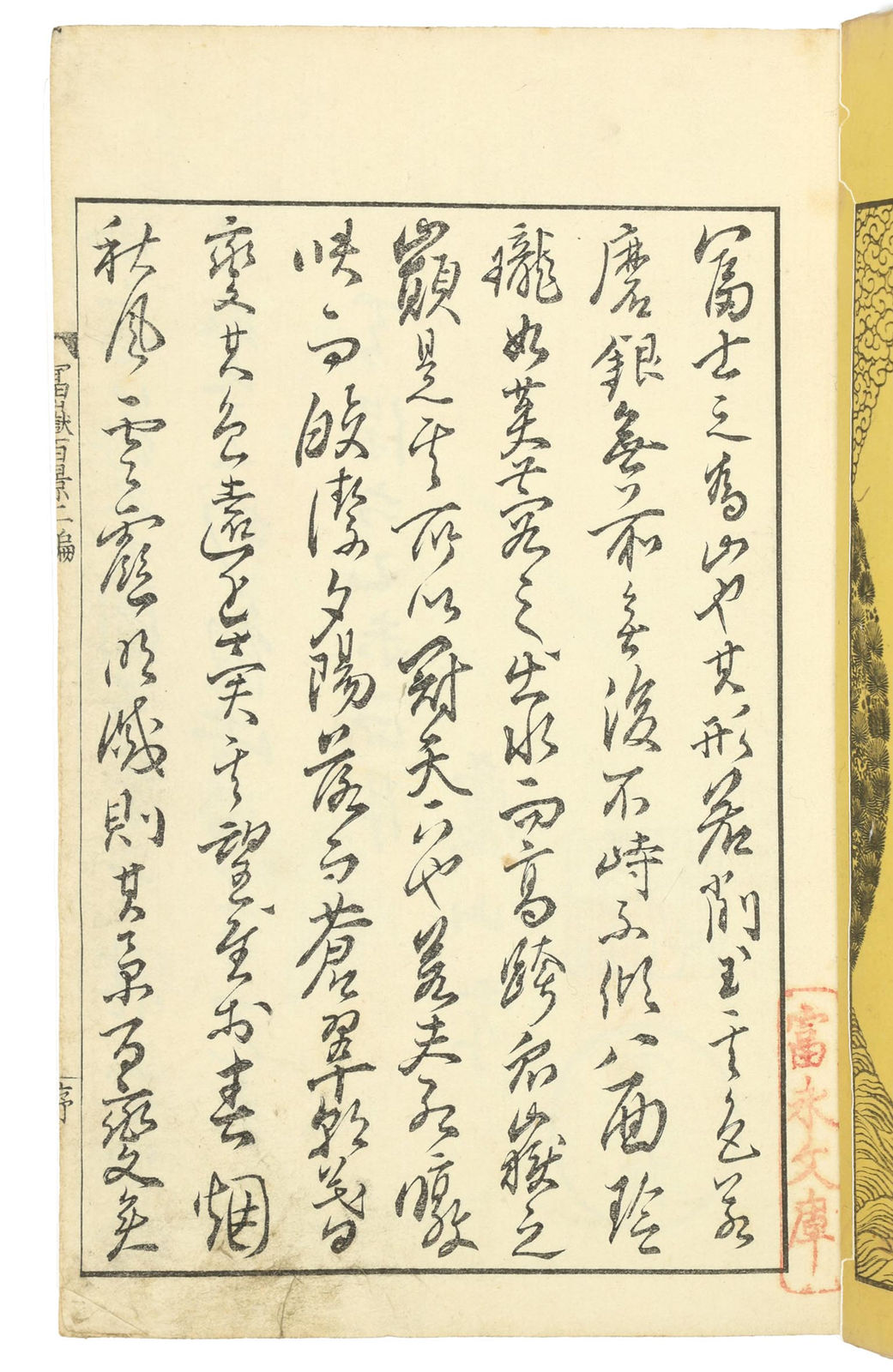
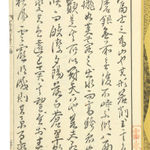
Conceived after the success of the Thirty Six Views, the project expands Hokusai’s lifelong meditation on Fuji in masterful monochrome printing. The artist’s famous colophon (in vols. 1 and 2) declares his late-life pursuit of artistic perfection under the name Gakyo Rojin Manji.
The first two volumes, printed in Edo in 1834 and 1835, are praised for their extremely subtle bokashi gradations and the superb cutting of Egawa Tomekichi’s workshop; the later third volume, issued at Nagoya by Eirakuya T shir , is traditionally considered less refined but completes the trilogy.
Among the most influential ehon of the period, the Fugaku Hyakkei shaped Western reception of Japanese book illustration alongside the Hokusai Manga, and remains a touchstone for studies of Edo-period print culture and technique.
There is debate about the date and circumstances of publication of volume three of 'One Hundred Views of Mt Fuji'. At present the earliest imprints known are undated and issued by Eirakuya of Nagoya, and the quality of the printing of the grey blocks is decidedly inferior to volumes one and two. Here the traditional dating of 1849, the year of Hokusai's death, is given, though some argue for a date several years earlier.
In his essay and comprehensive commentaries on 'One Hundred Views of Mt Fuji', Henry Smith stresses the spiritual as well as artistic dimension of the project, demonstrating how Hokusai regarded Fuji as a powerful reservoir of immortality that would assist him in his personal quest to live beyond one hundred years of age and fathom ultimate artistic truths.
Hokusai was about seventy when he commenced 'Thirty-Six Views of Mt Fuji' and about seventy-three when he embarked on 'One Hundred Views of Mt Fuji'. Overall there are relatively few 'place-specific' designs – in contrast to the print series - and much wonderful contrivance in the orchestration of the compositions.
“Indeed the Hundred Views is a technical triumph. In the first issues of the two volumes (known as the"Falcon Feather" edition from the design of the title label on the front cover), the sumi printing is surpassingly beautiful. A choice paper was used, the block cutting was to the highest standard, and the printers were meticulous in following every tone and gradation called for by the artist. A fine set of the "Falcon Feather"edition represents the ne plus ultra of monochrome printing” (Hillier, The Japanese Picture Book, p. 84, plates 80 & 81).
However, it is also “a work that achieves true masterpiece status only in the original edition…. but which has been known largely through later states with clumsy printing from worn [blocks]” (Henry D. Smith II, Hokusai, from introduction p. 7).
“The book was planned to be in three volumes, and the publishers had the most ambitious aims, enlisting Hokusai, then at the height of his powers, as the artist…It was to be printed in sumi rather than colour, but the utmost refinement was demanded of the printers, and the sharpness of the line and the marvelously soft gradations of tone, where called for, make the first two volumes the finest examples of consistent sumi-printing in the whole range of the Japanese book.” (Jack Hillier, The Art of the Japanese Book, 1987).
Provenance:
Edmond de Goncourt with his tipped in note written in purple ink at the beginning of volume one. plume de faucon, édition de la plus grande rareté... Edmond de Goncourt”; Colin Franklin, Culham ; private collection, California.
Henry D. Smith II, 'Hokusai: One Hundred Views of Mount Fuji', New York, Braziller & London, Thames & Hudson, 1988); Hillier, The Art of the Japanese Book II, 873-878; Keyes, Ehon: The Artist and the Book in Japan, No. 54; Toda, Descriptive Catalogue of Japanese and Chinese Books in the Ryerson Library, Art Institute of Chicago 262; Brown, Louise Norton, 'Block Printing and Book Illustration in Japan', London and New York, 1924, pp. 179, 183.
Join our mailing list
* denotes required fields
We will process the personal data you have supplied in accordance with our privacy policy (available on request). You can unsubscribe or change your preferences at any time by clicking the link in our emails.