
Taut, Bruno
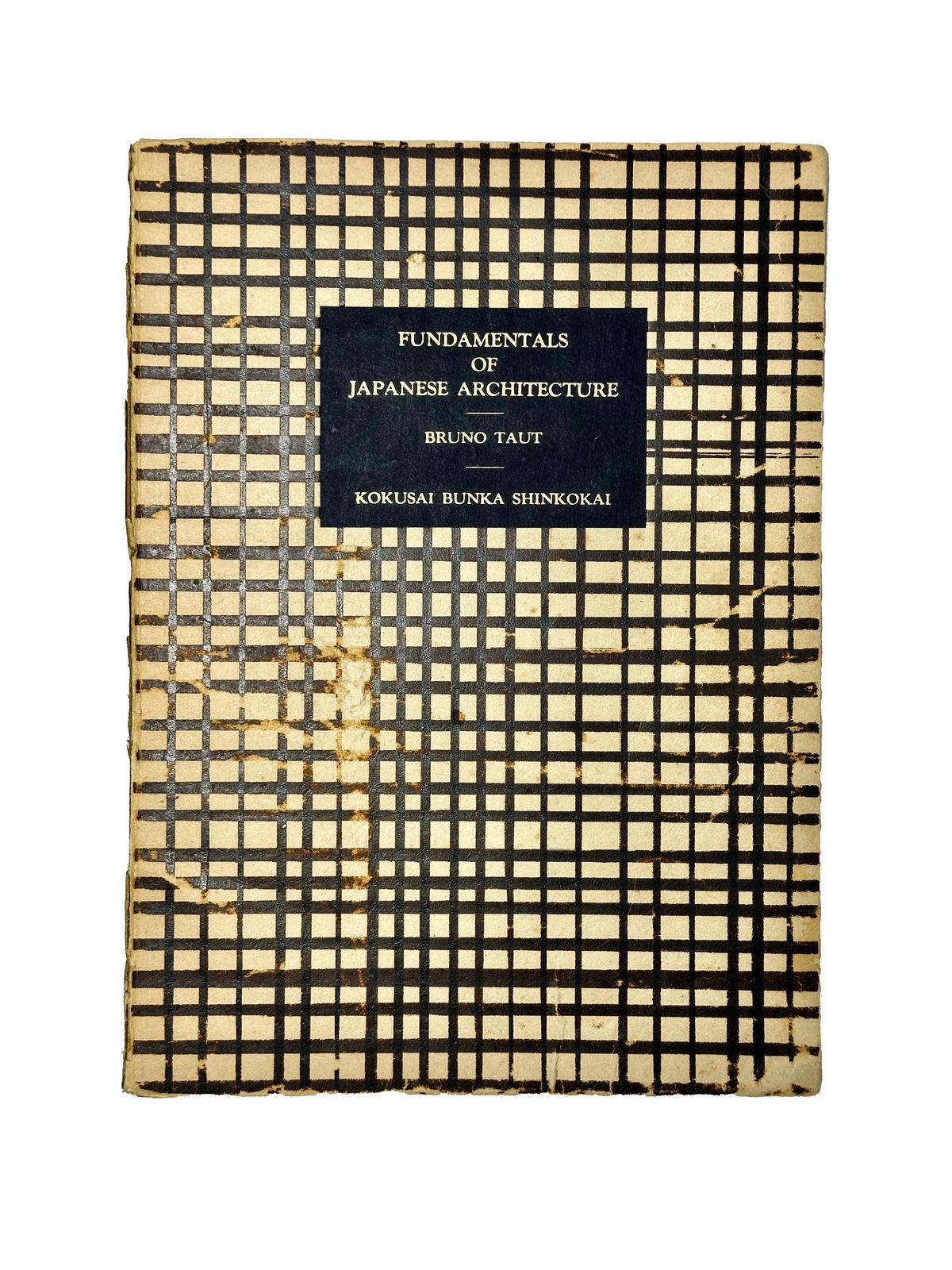
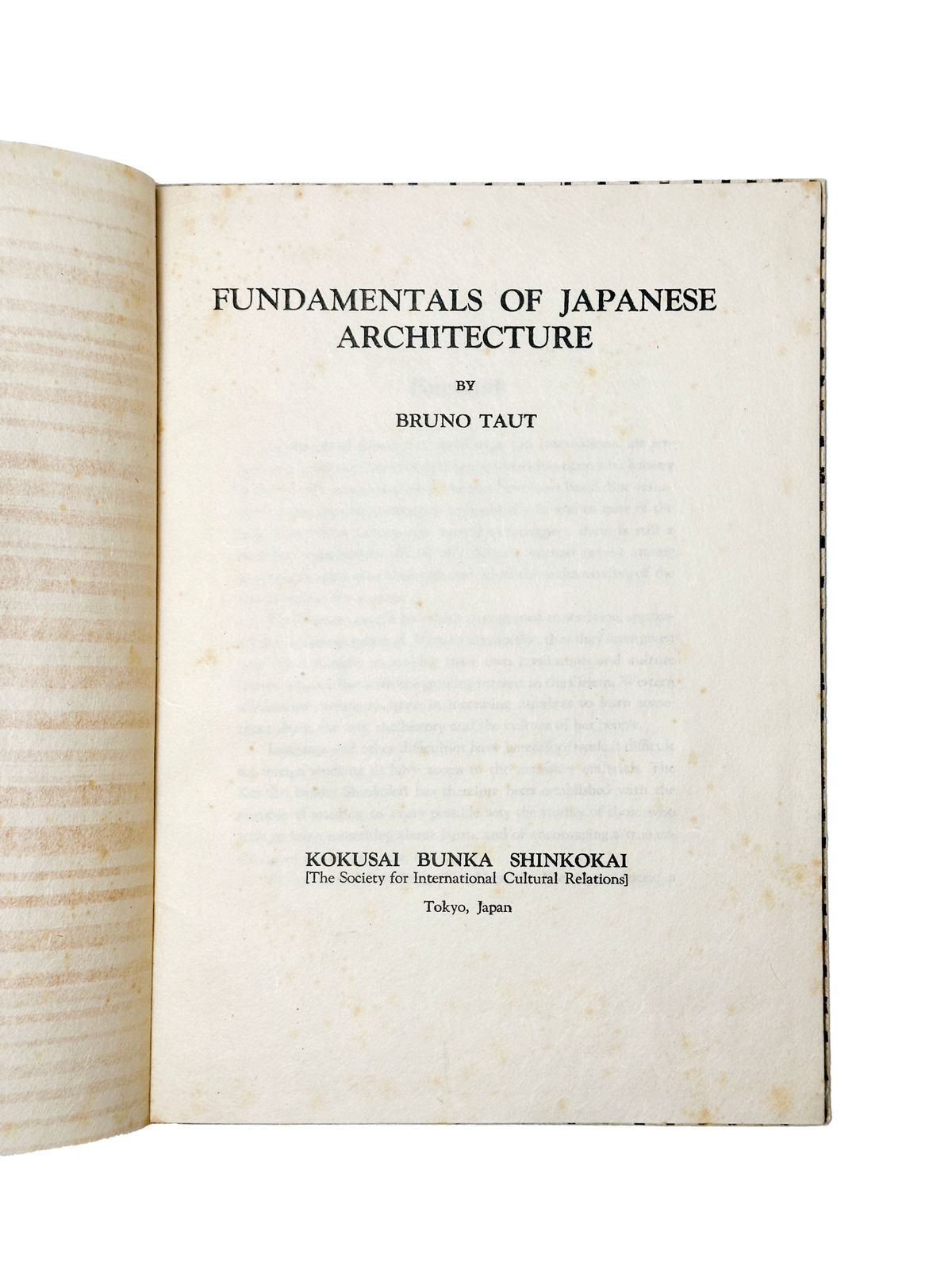
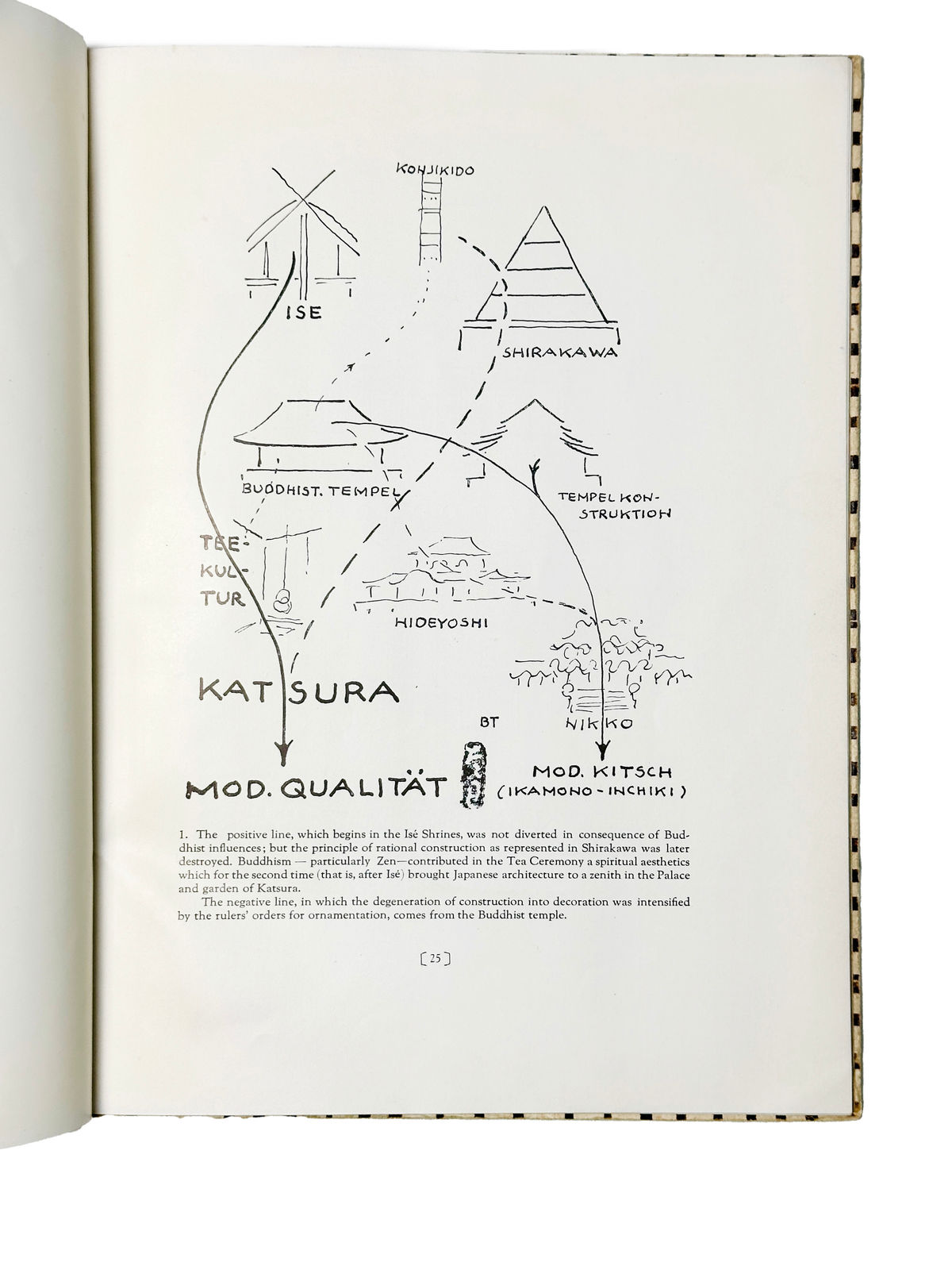
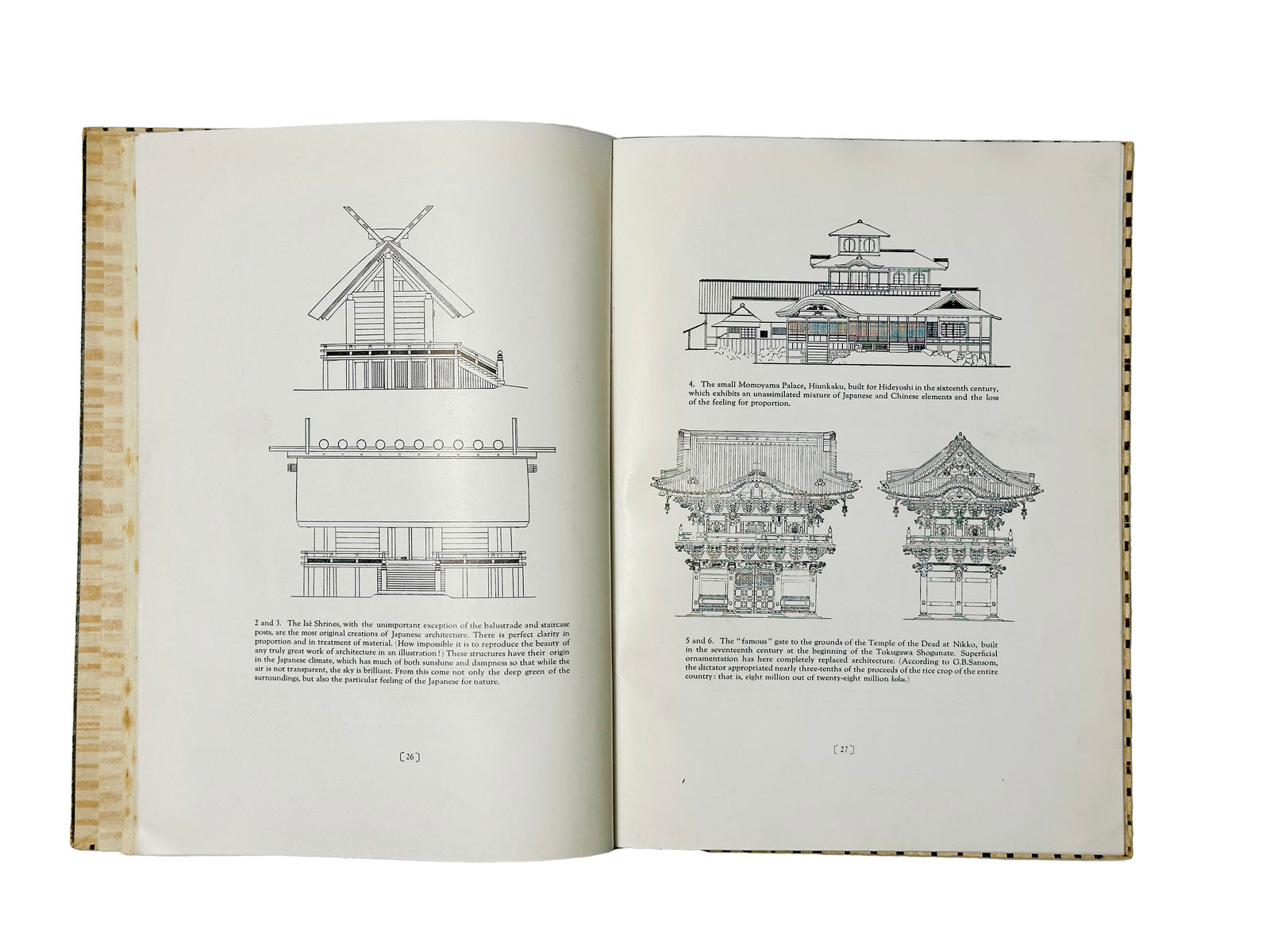
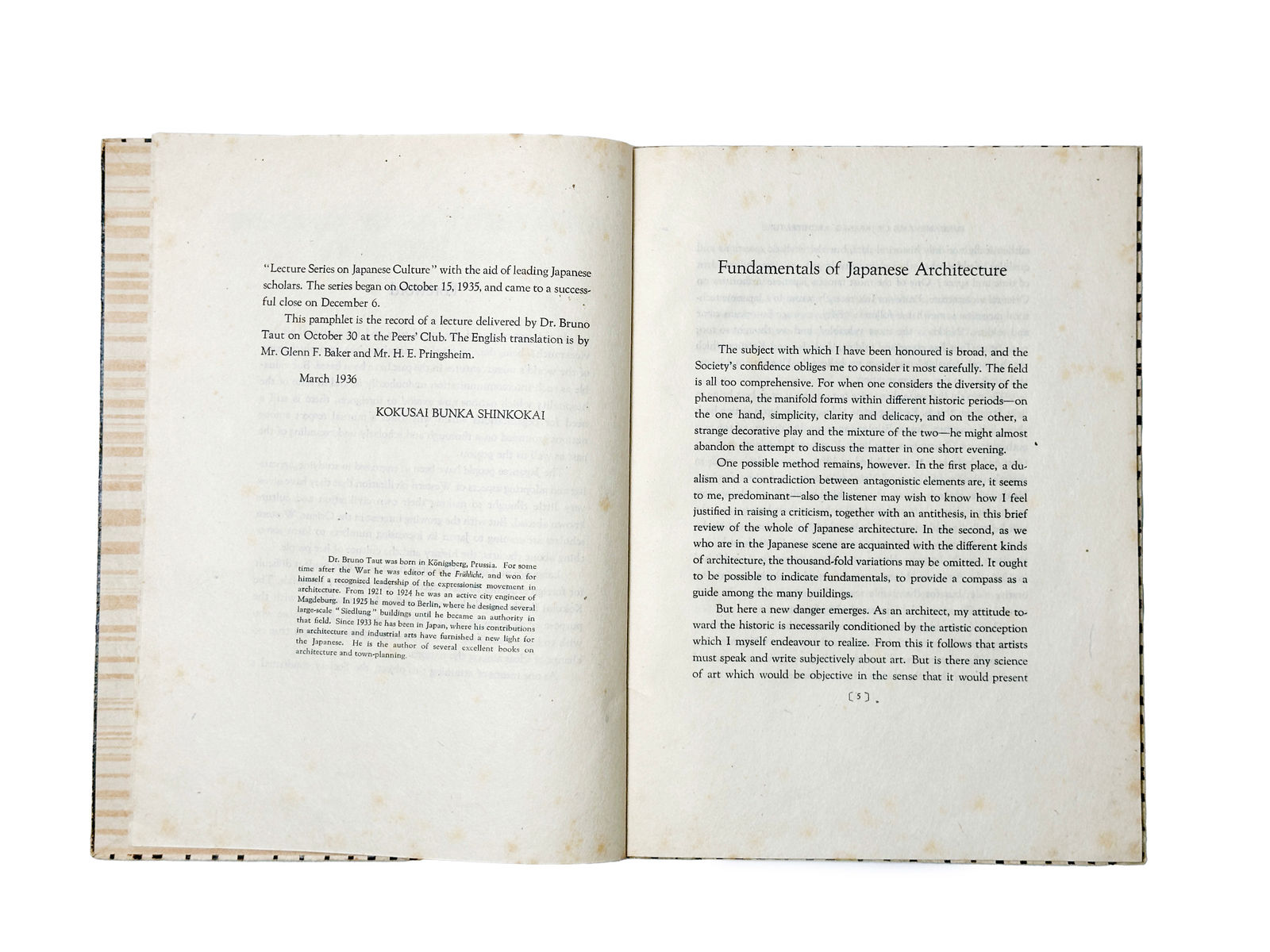
First English edition, first printing of this uncommon record of a lecture on Japanese architecture given by Taut in October 1935, with plans, sketches and 25 photographic illustrations.
Further images


4to (258 x 188 mm). 36 pp, 1 ff. 12 pages of photographic illustrations. Wrappers made of Fusama paper, comprised of brown patterned paper with dark brown gilt-lettered title label on front. Spine worn and conserved where chipped with only a few losses, corners bumped, light foxing, last text page clipped but text unaffected, overall very good.
Bruno Taut was a prolific German architect and urban planner active in the Weimar period, now considered one of the founding fathers of modern architecture. Like Mies Van der Rohe, his designs spanned the pre-modern to the modern. Impressively, he had built over 10,000 apartments in Berlin, however he is best known for his theoretical work, speculative writings and a handful of exhibition buildings. Taut's best-known single building is the prismatic dome of the Glass Pavilion at the Cologne Werkbund Exhibition (1914). His sketches for "Alpine Architecture" (1917) are the work of an unabashed Utopian visionary, and he is variously classified as a Modernist and an Expressionist. In 1927, he was one of the fifteen architects who contributed to the influential modernist Weissenhof Estate exhibition.
The text is a record of a lecture given by Taut on Japanese architecture at the Peers' Club on October 30, 1935. Being a noted advocate of socialist political policies, Taut was compelled to look for opportunities to emigrate from Germany when the Nazis came to power. With an invitation from Japanese architect Isaburo Ueno, he traveled to Japan via France, Greece, Turkey and Vladivostok, arriving in Tsuruga in 1933. Taut made his home in Takasaki, Gunma, where he produced three influential works on Japanese culture and architecture, comparing the historical simplicity of Japanese architecture with the modernist discipline.
He was noted for his appreciation of the stark, minimalist vein of Japanese architecture found at the Ise Shrine and the Katsura Imperial Villa in Kyoto. He was the first to write extensively about the architectural features of the Katsura Imperial Villa from a modernist perspective. His writing on the Japanese minimalist aesthetic found an appreciative audience in Japan and subsequently influenced the work of Le Corbusier and Walter Gropius.
Even the production of this text echoes his deep appreciation: the wrappers are beautifully made of Fusama paper, chiefly meant for covering Fusama and walls, specifically Torinoko with a painted pattern by Urushi (Japanese lacquer). The text paper is hand-made Shigarami-gami, produced from mulberry bleached in the snow, a winter by-product from farmers when there is no field-work, in very limited output today.
This work was translated by Glenn F. Baker and H.E. Pringsheim. Much of Taut's work in German remains untranslated into English.
Join our mailing list
* denotes required fields
We will process the personal data you have supplied in accordance with our privacy policy (available on request). You can unsubscribe or change your preferences at any time by clicking the link in our emails.